


Kanna and CBG: How These Two Botanicals Work Together

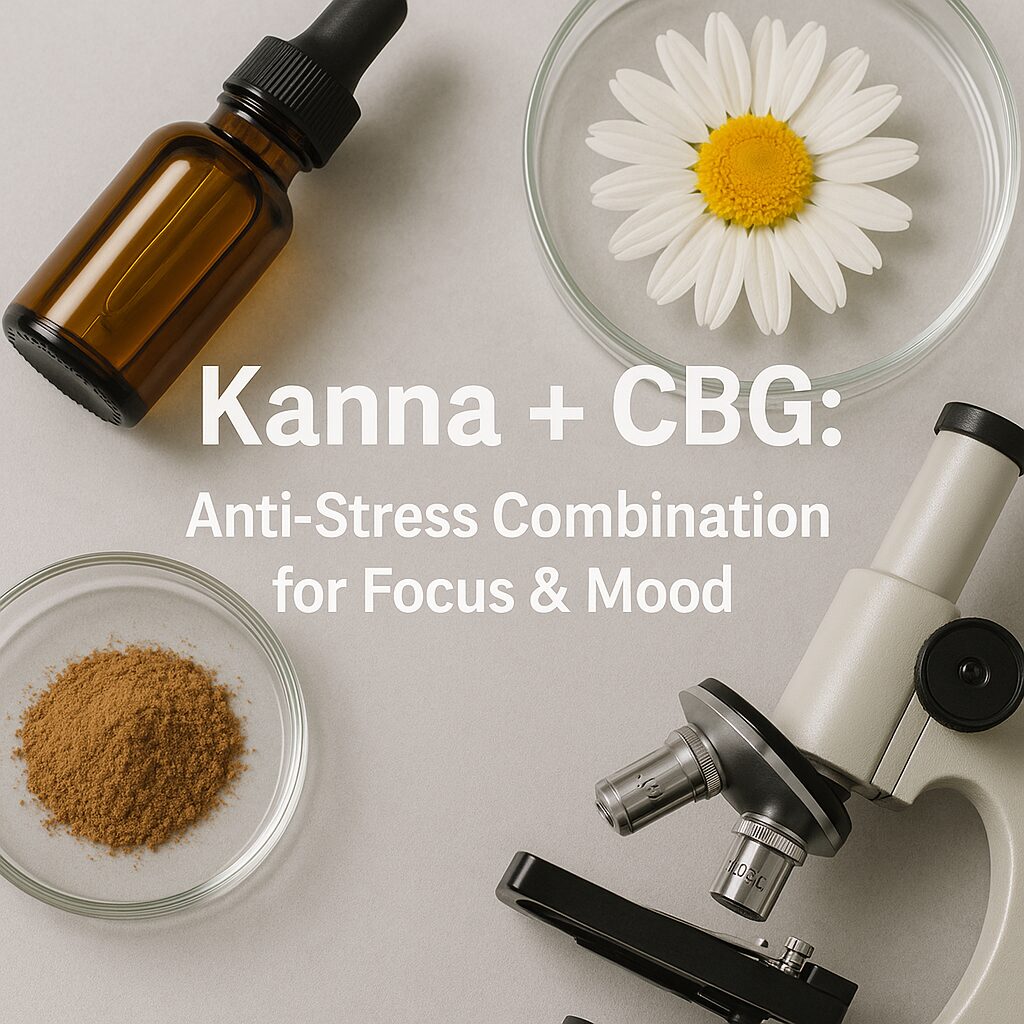
Interest in combining different plant compounds for stress and mental wellness is growing. Among the combinations attracting attention right now, kanna and CBG stand out. Both are non-intoxicating. Both work through pathways related to mood and stress. And crucially, they work through different systems — which is exactly why researchers and wellness enthusiasts find the combination interesting.
In this article, we explain what each compound is, how they interact with the body separately, and why combining them makes biological sense. We also cover what the current research shows — and what it does not yet tell us.
Important: kanna and CBG products are not medicines. They are not intended to treat, diagnose, cure, or prevent any condition. If you take SSRIs or other medications, speak to a doctor before using kanna. We explain why below.
What Is Kanna?
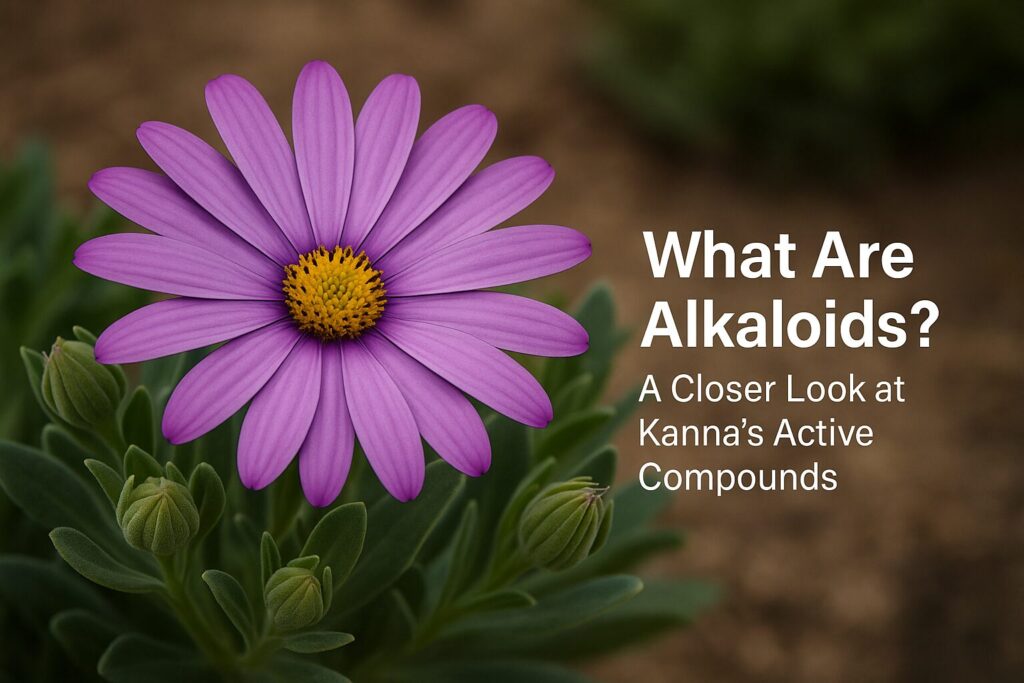
Kanna is the common name for Sceletium tortuosum, a succulent plant native to South Africa. Indigenous communities have used it for centuries — traditionally chewed, brewed as tea, or inhaled as snuff. Its main uses in traditional practice were for mood support, stress relief, and easing hunger during long journeys.
Researchers now study kanna because of its active alkaloids — primarily mesembrine and mesembrenone. These compounds appear to work in two main ways. First, they inhibit serotonin reuptake in a similar way to some antidepressant medications. Second, they inhibit an enzyme called phosphodiesterase 4 (PDE4), which plays a role in cognitive function and inflammation.
Because of this dual action, kanna attracts interest for its potential effects on mood, stress response, and attention. However, human clinical trials are limited. Most studies are small or preliminary. So while the traditional use history is long, the clinical evidence base is still developing.
What Is CBG?
CBG stands for cannabigerol. It is a non-intoxicating cannabinoid from the hemp plant. Researchers sometimes call it the mother cannabinoid because the plant produces it first, before converting it into CBD and THC as it matures.
CBG interacts with the body’s endocannabinoid system (ECS), which plays a role in regulating mood, stress responses, sleep, and inflammation. In particular, CBG shows affinity for both CB1 and CB2 receptors. It also interacts with adrenergic receptors and serotonin receptors — specifically the 5-HT1A receptor, which researchers link to mood and anxiety regulation.
Like kanna, the human clinical research on CBG is limited. However, early studies and user surveys suggest that people use CBG most often for stress management, focus support, and daily mental balance. CBG is non-intoxicating and legal in most EU countries when derived from hemp with THC below 0.2%.
How Kanna and CBG Work Together
The case for combining kanna and CBG rests on what researchers call complementary mechanisms — meaning they act on different but related systems in the body. So instead of doubling up on the same pathway, the two compounds approach mood and stress regulation from different angles.
Kanna works primarily through the serotonin system. It slows the reuptake of serotonin, which means serotonin stays available in the synaptic gap for longer. It also inhibits PDE4, which has separate effects on cognition and inflammatory signalling.
CBG, on the other hand, works through the endocannabinoid system and also interacts with serotonin receptors — but differently to kanna. Where kanna affects serotonin reuptake, CBG appears to act as a partial agonist at the 5-HT1A receptor. In other words, they both touch the serotonin system, but at different points.
This is why the combination is scientifically interesting. However, it is also why caution matters. Two compounds that both affect serotonin-related pathways need to be approached carefully — especially if you already take medications that affect serotonin levels.
What Does the Research Currently Show?
Research on kanna and CBG individually is still at an early stage. Research on their combination is even more limited — there are currently no published human clinical trials specifically studying the kanna-CBG pairing.
However, the individual research is worth understanding. A 2013 clinical trial on a standardised kanna extract found improvements in cognitive flexibility and executive function in healthy adults. A 2021 survey of CBG users found that the most commonly reported uses were anxiety and stress management. Early preclinical research on CBG suggests it may interact with stress-related receptor systems in the brain.
So the rationale for combining them is based on complementary mechanisms and individual preliminary findings — not on direct clinical evidence for the combination itself. That distinction matters. Promising early science is not the same as proven clinical outcomes.
Important: Kanna and Serotonin Interactions
⚠️ If you take SSRIs, SNRIs, MAOIs, or any other medication that affects serotonin levels, do not use kanna without first speaking to a doctor. Combining kanna with these medications may increase serotonin activity to unsafe levels — a condition called serotonin syndrome. This is a medical emergency. Even if your medication is prescribed at a low dose, always get professional advice first.
How People Use Kanna and CBG Together
Kanna and CBG are available in several formats. The most common options include:
- Sublingual oils. Oils placed under the tongue absorb faster than edibles. This format suits people who want a quicker onset.
- Gummies. A pre-dosed, convenient option. Onset is slower due to digestion, but the effect tends to last longer.
- Loose powder or extract. Can be mixed into drinks. Useful if you want to adjust the dose more precisely.
If you are new to either compound, starting with a low amount and building up gradually over several days is a sensible approach. However, we do not give specific dosage recommendations here because individual responses vary significantly and the right amount depends on factors only you and your healthcare provider can assess.
Morning or midday use is most common for people who want the combination to support focus and stress management during the day. Because neither compound is sedating, evening use is less typical — but individual preferences vary.
Kanna and CBG Products at Canna Health Amsterdam
If you want to explore this combination, Canna Health Amsterdam stocks two relevant products:
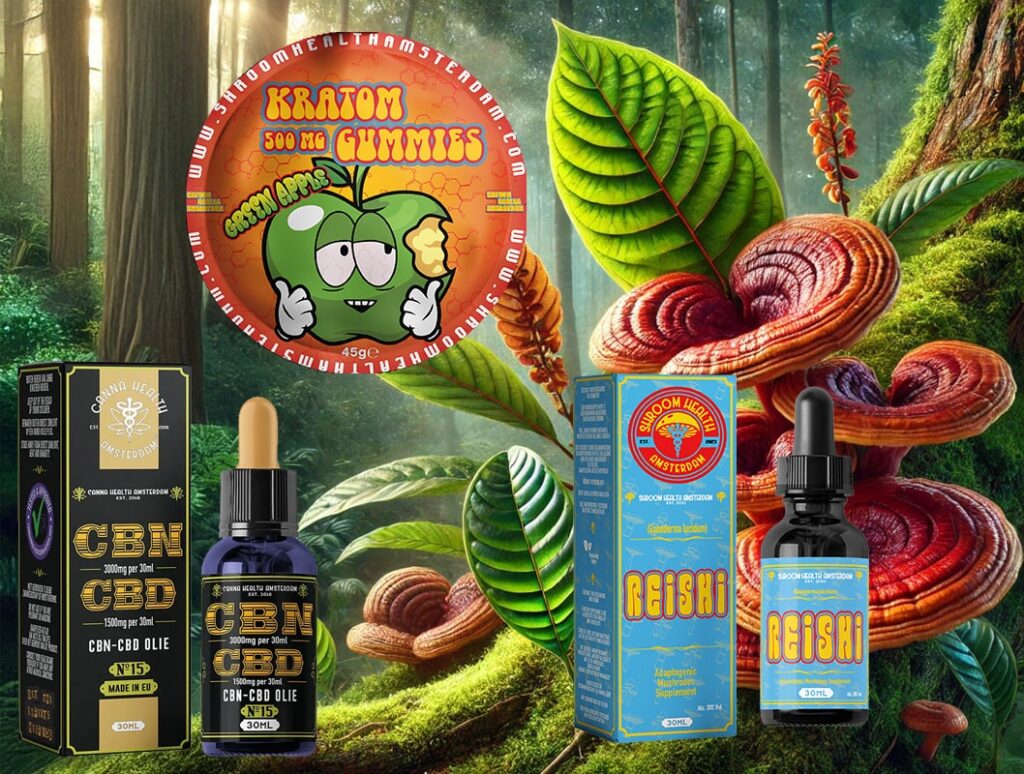
- Kanna Gummies — Cherry Flavour — 25 mg kanna per gummy. Pre-dosed, convenient, and vegan. Each gummy contains a consistent amount of kanna extract.
- CBG + CBD Oil No.15 — 3000 mg CBG & 1500 mg CBD. A high-strength oil combining CBG and CBD. Sublingual application for faster absorption.
Both products are independently lab-tested. COAs are available on each product page. Neither is a medicine. If you take any medication, speak to a healthcare professional before adding either product to your routine.
Final Thoughts
Kanna and CBG are two botanicals that work through different but related systems in the body. The scientific rationale for combining them is based on complementary mechanisms — serotonin modulation from kanna, endocannabinoid and receptor interaction from CBG.
However, the research on this specific combination is still very early. So approach it with genuine curiosity rather than fixed expectations. Start low, be consistent, and pay attention to how your body responds over several weeks.
And if you take any medication — especially anything affecting serotonin — speak to a doctor first. That is not a standard disclaimer. It is genuinely important with kanna specifically.
References
- Brendler T, et al. (2010). Phytochemistry and pharmacology of Sceletium tortuosum (kanna). Journal of Ethnopharmacology, 137(3), 1124–1129. [Mesembrine alkaloid mechanisms and traditional use.] Journal ↗
- Chiu S, et al. (2014). Proof-of-concept randomized controlled study of cognition effects of the proprietary extract Sceletium tortuosum (Zembrin) targeting phosphodiesterase-4 in cognitively healthy subjects. Evidence-Based Complementary and Alternative Medicine, 2014. Journal ↗
- Nachnani R, et al. (2021). The pharmacological case for cannabigerol. Journal of Pharmacology and Experimental Therapeutics, 376(2), 204–212. Journal ↗
- Patel M, et al. (2021). Survey of patients employing cannabigerol-predominant cannabis preparations. Cannabis and Cannabinoid Research, 7(5), 706–716. Journal ↗
- Lu HC, Mackie K. (2016). An introduction to the endogenous cannabinoid system. Biological Psychiatry, 79(7), 516–525. Journal ↗
Frequently Asked Questions: Kanna and CBG
What happens when you combine kanna and CBG?
Kanna and CBG work through different but related systems in the body. Kanna affects the serotonin system by slowing serotonin reuptake and inhibiting PDE4. CBG interacts with the endocannabinoid system and also has affinity for serotonin receptors, particularly 5-HT1A. Because they act on different points in overlapping systems, researchers find the combination interesting. However, there are currently no published human clinical trials studying this specific combination. Individual responses vary and the current evidence is preliminary.
Is kanna safe to use with CBG?
For healthy adults not taking medications, kanna and CBG are generally considered low-risk botanicals. However, kanna affects serotonin reuptake in a similar way to some antidepressant medications. If you take SSRIs, SNRIs, MAOIs, or any other medication that affects serotonin levels, you must speak to a doctor before using kanna. Combining kanna with these medications could increase serotonin activity to unsafe levels. CBG does not carry the same specific concern, but speaking to a healthcare professional before adding any new supplement to your routine is always advisable.
What is kanna used for?
Kanna (Sceletium tortuosum) is a South African plant with a long history of traditional use for mood support and stress relief. Its active alkaloids — primarily mesembrine and mesembrenone — inhibit serotonin reuptake and phosphodiesterase 4 (PDE4). Modern researchers study kanna for its potential effects on mood, cognitive function, and stress responses. However, clinical evidence in humans is still limited. Kanna is not an approved medicine and is not intended to treat any condition.
Are kanna and CBG legal in the Netherlands?
Yes — both kanna and CBG are legal in the Netherlands. Kanna (Sceletium tortuosum) is not a controlled substance in the Netherlands or most EU countries. CBG is a non-intoxicating cannabinoid from hemp and is legal when THC content stays below 0.2%. All kanna and CBG products sold by Canna Health Amsterdam comply with Dutch legal requirements and are independently lab-tested.
Disclaimer: This blog is for informational and educational purposes only. We review and reference available studies and reputable sources; however, content may not reflect the most current research or regulations and should not be taken as medical, legal, or professional advice. We do not make or imply health claims. Products mentioned are not intended to diagnose, treat, cure, or prevent any disease and statements have not been evaluated by EFSA or the FDA. Effects can vary between individuals. Always consult a qualified healthcare professional before use and verify that any product or ingredient is lawful in your jurisdiction.