




CBG Gummies for Focus and Calm: What to Expect

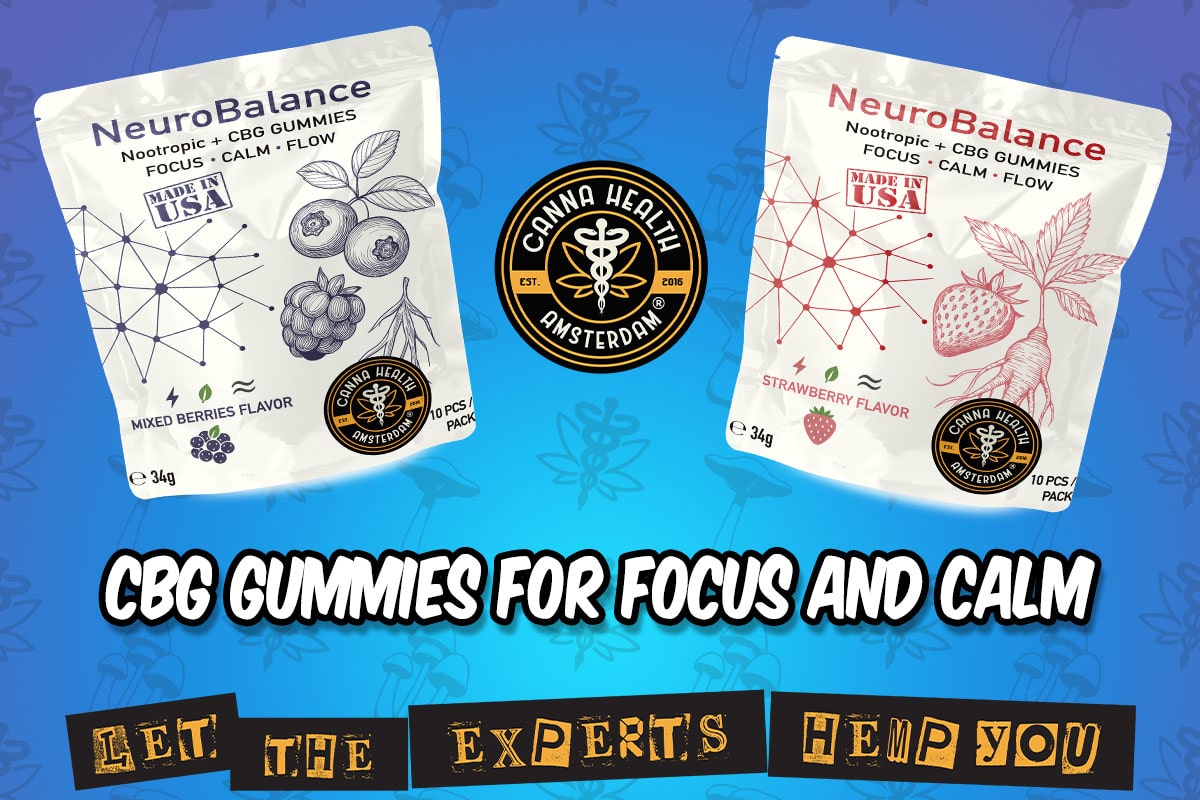
More people are turning to CBG gummies for focus and calm as part of their daily routine. CBG — cannabigerol — is a non-intoxicating cannabinoid from the hemp plant. So unlike THC, it does not produce a high.
In this article, we explain why people choose CBG gummies for daytime use, what they typically report feeling, how CBG compares to other focus supplements, and what to check before you buy.
Note: CBG gummies are not medicines. They are not intended to treat, cure, or prevent any condition. Individual responses vary. If you have health concerns, speak to a healthcare professional first.
What Is CBG and Why Do People Use It for Focus?
CBG stands for cannabigerol. It is one of over 100 cannabinoids found in the cannabis plant. However, unlike CBD, CBG is present only in small amounts in most hemp strains. Because of this, CBG products are less common and often more expensive than CBD.
Researchers study CBG for its interaction with the body’s endocannabinoid system (ECS). The ECS plays a role in regulating mood, attention, and stress responses. So scientists are interested in how CBG might influence these systems.
People who use CBG gummies for focus often describe the experience as clear and functional rather than sedating. In contrast to some CBD products, which many people associate with winding down, CBG tends to attract users who want something for the daytime.
However, it is important to be clear: these are user-reported experiences, not clinical outcomes. CBG research in humans is still limited. We do not yet have enough clinical data to make firm statements about what CBG does.
What Do CBG Gummies Feel Like?
People who use CBG gummies regularly often describe a similar experience. Instead of a strong or sedating effect, they report something more subtle. Common descriptions include:
- A sense of calm without feeling sleepy or slowed down
- Easier to concentrate, with less mental noise or distraction
- A steady, functional feeling rather than a peak-and-crash pattern
Because CBG is non-intoxicating, it does not interfere with normal thinking or coordination. So many people feel comfortable using it during work, study, or creative tasks.
That said, individual responses to CBG vary. Some people notice a clear effect. Others report very little. Factors like body weight, metabolism, and the dose all play a role. So if you try CBG gummies for the first time, start with a low dose and build up gradually.
CBG Gummies vs Other Focus Supplements
Most focus supplements on the market rely on stimulants — typically caffeine, sometimes combined with L-theanine or other ingredients. These work for many people. However, stimulants can also cause side effects like jitteriness, a racing heart, or an energy crash once they wear off.
CBG gummies work differently. Because CBG does not stimulate the nervous system in the same way, people who are sensitive to caffeine sometimes find it a more comfortable option. Instead of a sharp spike in alertness, many users report a smoother, more settled feeling.
In addition, CBG gummies are pre-dosed and consistent. So you know exactly how much you are taking each time. This makes it easier to find the amount that works for you without the guesswork of measuring powders or drops.
However, CBG is not a direct replacement for stimulants. It works through different pathways. So the effects are different too — not stronger or weaker, just different. Whether it suits you depends on what you are looking for.
When Do People Use CBG Gummies?
Because CBG gummies are non-intoxicating, many people fit them into their daytime routine. Common times people choose to use them include:
- In the morning as part of a daily supplement routine
- Before a long workday or a demanding study session
- During stressful periods when mental load is high
- As a caffeine-free alternative on days when stimulants feel like too much
Some people also take CBG gummies consistently every day rather than only when needed. Like many supplements, cannabinoids may take a few weeks of regular use before effects become noticeable. So consistency matters more than timing.
What to Check Before You Buy CBG Gummies
Not all CBG gummies are the same. So before you buy, check these four things:
- CBG dose per gummy. Many products list total cannabinoid content but do not break out the CBG amount separately. Look for a brand that states the exact CBG milligrams per gummy clearly.
- Full ingredient list. Some CBG gummies also include other active ingredients — for example, nootropics like bacopa extract, ginkgo biloba, alpha GPC, zinc, or vitamin B5. If a gummy contains these, the label should list exact amounts.
- Third-party lab report (COA). An independent Certificate of Analysis confirms cannabinoid levels and checks for contaminants. If a brand does not publish these, look elsewhere.
- EU THC compliance. Products sold in Europe must stay below the legal THC limit — 0.2% in most EU countries. Always confirm this before ordering.
At Canna Health Amsterdam, all CBG gummies go through independent lab testing. Every product page lists the full ingredient profile and links directly to the COA. In addition, all products comply with Dutch and EU legal requirements.
Are CBG Gummies Legal in Europe?
Yes — CBG gummies are legal in most European countries when producers make them from hemp and keep THC below the local limit. In most EU member states, that limit is 0.2%.
CBG is non-intoxicating. So it does not fall under controlled substance rules in most EU markets. However, laws do vary by country. Always check the rules in your specific location before you order — especially if you live outside the Netherlands or Western Europe.
Final Thoughts
CBG gummies for focus and calm appeal to people who want a non-intoxicating daytime option that fits into a normal routine. Because CBG does not cause a high, it suits daily use in a way that THC-based products do not.
However, the research on CBG is still developing. User reports are promising, but clinical trials in humans are limited. So approach CBG gummies as a supplement to explore — not as a guaranteed outcome.
If you want to try them, Canna Health Amsterdam offers lab-tested, clearly labelled CBG gummies that meet EU standards. Check the COA on the product page, start with a low dose, and give it a few weeks before drawing conclusions.
References
- Nachnani R, et al. (2021). The pharmacological case for cannabigerol. Journal of Pharmacology and Experimental Therapeutics, 376(2), 204–212. Journal ↗
- Patel M, et al. (2021). Survey of patients employing cannabigerol-predominant cannabis preparations: perceived medical effects, outcomes, and reasons for use. Cannabis and Cannabinoid Research, 7(5), 706–716. Journal ↗
- Lu HC, Mackie K. (2016). An introduction to the endogenous cannabinoid system. Biological Psychiatry, 79(7), 516–525. Journal ↗
- Stahl SM. (2008). Stahl’s Essential Psychopharmacology. Cambridge University Press. [Background context on stimulant mechanisms and nervous system effects, used for CBG vs stimulant comparison section.]
- Andre CM, et al. (2016). Cannabis sativa: The plant of the thousand and one molecules. Frontiers in Plant Science, 7, 19. Journal ↗
Frequently Asked Questions: CBG Gummies for Focus and Calm
Do CBG gummies help with focus?
Some people report that CBG gummies help them feel more focused and less mentally scattered during the day. However, CBG is not an approved treatment for any condition, and clinical research in humans is still limited. Individual responses vary. What works well for one person may feel different for another. CBG gummies are a supplement, not a medicine.
How are CBG gummies different from caffeine?
Caffeine works by blocking adenosine receptors in the brain, which delays the feeling of tiredness and increases alertness. CBG works through the endocannabinoid system, which plays a role in mood and stress regulation. Because of this, the two compounds work through completely different pathways. People who are sensitive to caffeine sometimes find CBG a more comfortable daytime option. However, CBG is not a stimulant and does not produce the same sharp alertness effect as caffeine.
When is the best time to take CBG gummies?
Most people who use CBG gummies for focus take them in the morning or before a work or study session. Because CBG is non-intoxicating, it suits daytime use and does not cause sedation. However, the best time depends on the individual. Some people take CBG gummies consistently every day as part of a supplement routine. Like many supplements, regular use over several weeks may give a clearer picture of how CBG works for you personally.
Are CBG gummies legal in Europe?
Yes — in most European countries, CBG gummies are legal when producers make them from hemp and keep THC below the local legal limit, which is 0.2% in most EU member states. CBG is non-intoxicating and does not fall under controlled substance rules in most EU markets. However, laws vary by country. Always check the rules in your specific location before ordering.
Disclaimer: This blog is for informational and educational purposes only. We review and reference available studies and reputable sources; however, content may not reflect the most current research or regulations and should not be taken as medical, legal, or professional advice. We do not make or imply health claims. Products mentioned are not intended to diagnose, treat, cure, or prevent any disease and statements have not been evaluated by EFSA or the FDA. Effects can vary between individuals. Always consult a qualified healthcare professional before use and verify that any product or ingredient is lawful in your jurisdiction.