

CBD and Breast Cancer: What the Research Shows (2026)

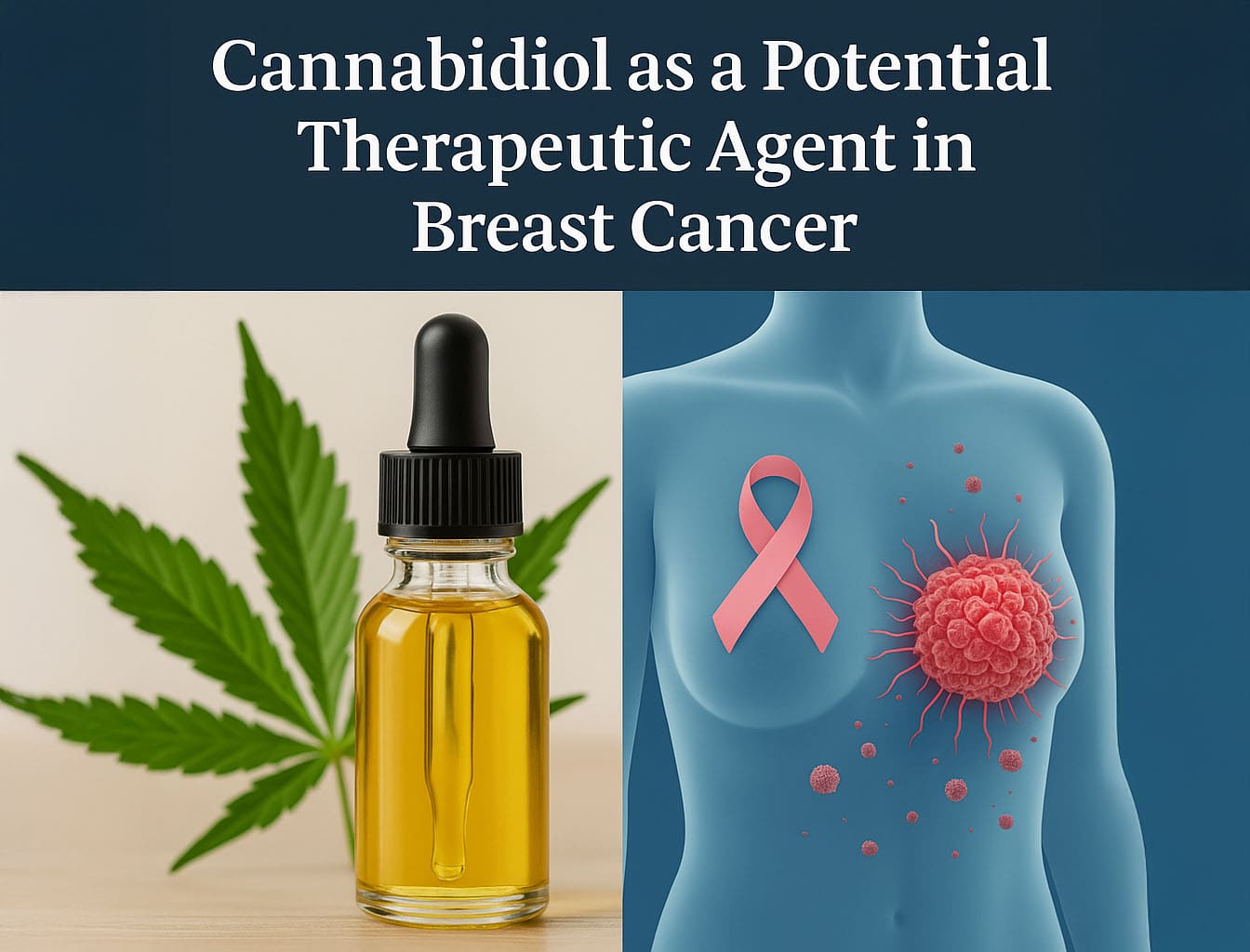
Breast cancer is one of the most common cancers worldwide. It presents significant challenges because of its varied subtypes and frequent resistance to existing therapies. Research into CBD and breast cancer is growing. A 2025 systematic review identified cannabidiol (CBD) — a non-psychoactive compound from Cannabis sativa — as a compound of genuine scientific interest in oncology research (BMC Cancer, 2025).
This article reviews what that research shows. It is not medical advice. CBD is not an approved cancer treatment. For guidance on your own health, always consult a qualified healthcare professional.
What the Research Found: Evidence from a 2025 Systematic Review
A systematic review published in BMC Cancer (2025) analysed 34 publications on cannabidiol and breast cancer, covering studies from 1998 to 2025. The review focused on preclinical research — laboratory and animal models — rather than human trials.
In preclinical models, CBD demonstrated several anti-tumour effects:
- Apoptosis induction: CBD triggered programmed cell death in cancer cells.
- Proliferation inhibition: CBD reduced uncontrolled cancer cell growth.
- Metastasis suppression: CBD limited the spread of cancer to other tissues.
- Tumour microenvironment modulation: CBD altered conditions in and around tumour cells, making survival harder for cancer cells.
Mechanistically, CBD appeared to act on pathways including PI3K/Akt, mTOR, and PPARγ. It interacted with both cannabinoid receptors (CB1, CB2) and non-cannabinoid receptors (BMC Cancer, 2025).
CBD and Triple-Negative Breast Cancer (TNBC)
The most promising preclinical findings relate to triple-negative breast cancer (TNBC). TNBC is an aggressive subtype with limited treatment options. It does not respond to hormone therapies or HER2-targeted drugs.
In preclinical models, CBD’s multi-pathway mechanisms showed potential to slow disease progression in TNBC. Researchers noted that this multi-targeted approach may be relevant precisely because TNBC often resists single-target therapies (BMC Cancer, 2025).
These are preclinical findings. They do not confirm that CBD treats TNBC in humans.
Clinical Evidence: Where Things Stand
Human clinical trials on CBD and breast cancer remain limited. The available data is preliminary. Researchers have explored whether CBD could support conventional therapies in three areas:
- Reducing tumour-related inflammation
- Supporting quality of life during treatment
- Potential synergy with chemotherapy
However, these findings require confirmation through larger, well-controlled clinical trials. They do not support clinical use of CBD as a cancer therapy at this stage (BMC Cancer, 2025).
Challenges and What Research Is Needed Next
Despite encouraging preclinical results, significant obstacles remain before CBD could ever be considered for clinical oncology:
- Study design variability: Research has used different methods, making direct comparisons difficult.
- No standardised dosing protocols: Effective doses, routes of administration, and treatment durations remain undefined.
- Very limited human data: Almost all findings come from laboratory or animal studies.
Future research priorities include robust human clinical trials, identification of predictive biomarkers, and exploration of how CBD might combine with existing therapies in personalised treatment contexts (BMC Cancer, 2025).
Conclusion
The science behind CBD and breast cancer is at an early but genuinely interesting stage. Preclinical research — particularly around TNBC — identifies plausible mechanisms through which cannabidiol may exert anti-tumour effects.
Human clinical evidence is not yet sufficient to draw conclusions. CBD is not an approved cancer treatment. It should not replace or delay conventional oncology care.
For anyone affected by breast cancer, the only appropriate source of treatment guidance is a qualified oncologist or healthcare professional.
References
- Fraguas-Sánchez AI, et al. (2025). Cannabidiol as a potential therapeutic agent in breast cancer: a systematic review. BMC Cancer. Journal ↗
- Bray F, et al. (2024). Global cancer statistics 2022. CA: A Cancer Journal for Clinicians. Journal ↗
- McAllister SD, et al. (2007). Cannabidiol as a novel inhibitor of Id-1 gene expression in aggressive breast cancer cells. Molecular Cancer Therapeutics, 6(11), 2921–2927. Journal ↗
- Moreau M, et al. (2020). Cannabidiol inhibits metastasis of breast cancer cells. Cannabis and Cannabinoid Research, 5(4), 311–320. Journal ↗
Frequently Asked Questions About Hemp History in Ukraine and Russia
Why was hemp so important to Eastern Europe historically?
Hemp was one of the most economically valuable crops available before synthetic fibres and industrial cotton. Its fibres produced rope, canvas, and clothing. Its seeds provided oil and food. The climate and soil conditions across Ukraine and Russia were exceptionally well suited to hemp cultivation, making the region a dominant global supplier. At peak production in the 19th century, Russia alone accounted for approximately 40% of European hemp output — primarily supplying fibre for naval rigging and sail canvas.
What role did Russian hemp play in the Napoleonic Wars?
British naval supremacy depended heavily on Russian hemp for rope and canvas. Napoleon’s Continental System attempted to cut Britain off from this supply. Russia’s decision to continue trading with Britain, partly driven by the economic importance of the hemp trade, contributed to the breakdown of the Franco-Russian alliance. This deterioration was a significant factor in Napoleon’s decision to invade Russia in 1812. The hemp trade was therefore not just an agricultural footnote — it influenced the course of one of history’s most consequential military campaigns.
How much hemp did Soviet Ukraine produce?
Before the 1950s, Soviet Ukraine dedicated more than 150,000 hectares to hemp cultivation — making it one of the largest hemp-producing regions in the world. Production declined significantly from the 1960s onwards as cotton expansion in Soviet Central Asia shifted state agricultural priorities. The Institute of Bast Crops in Ukraine had by that point accumulated one of the most extensive bodies of hemp agronomic research in existence, which remains a significant scientific legacy.
Is Ukraine still an important hemp producer today?
Yes. Ukraine has re-emerged as a significant hemp producer since the early 2000s and has grown considerably alongside the European CBD market. The country’s fertile black soil, established agricultural infrastructure, and historic hemp research institutions give it structural advantages. Ukrainian hemp seed, fibre, and CBD extracts are exported to European markets. Several European CBD brands source raw material from Ukrainian producers.
Disclaimer: This blog is for informational and educational purposes only. We review and reference available studies and reputable sources; however, content may not reflect the most current research or regulations and should not be taken as medical, legal, or professional advice. We do not make or imply health claims. Products mentioned are not intended to diagnose, treat, cure, or prevent any disease and statements have not been evaluated by EFSA or the FDA. Effects can vary between individuals. Always consult a qualified healthcare professional before use and verify that any product or ingredient is lawful in your jurisdiction.